
Strange Car Noises Traced to Their Actual Source
Noise Diagnosis in Kansas City for vehicles producing sounds that started during a commute or appear only under specific conditions
A squeal from the front end under braking, a knock that appears only at highway speed, a rattle that stops when you go over a bump: each of those patterns points toward a different system, and identifying which one requires isolating the sound rather than guessing. First Time Fix IT diagnoses unusual vehicle noises in Kansas City, coming to the customer's location to evaluate the sound on foreign and domestic cars before any repair is proposed. The diagnostic goal is to find the actual source and explain it in plain terms before anything else is discussed.
Northern metro commuter vehicles cover significant highway mileage, and noises that appear during the drive to work are often most informative when the car is checked soon after the sound presents itself—not after a tow that changes the vehicle's temperature, load, or position. The technician road tests when needed, then isolates the noise by system: belts and accessories, brakes, suspension and steering, exhaust, or drivetrain. Each system produces characteristic sound signatures, and narrowing the search to one system changes the component testing that follows.
Arrange an on-site noise evaluation at your home or work location to identify what the sound is, which system it is coming from, and what the repair involves.
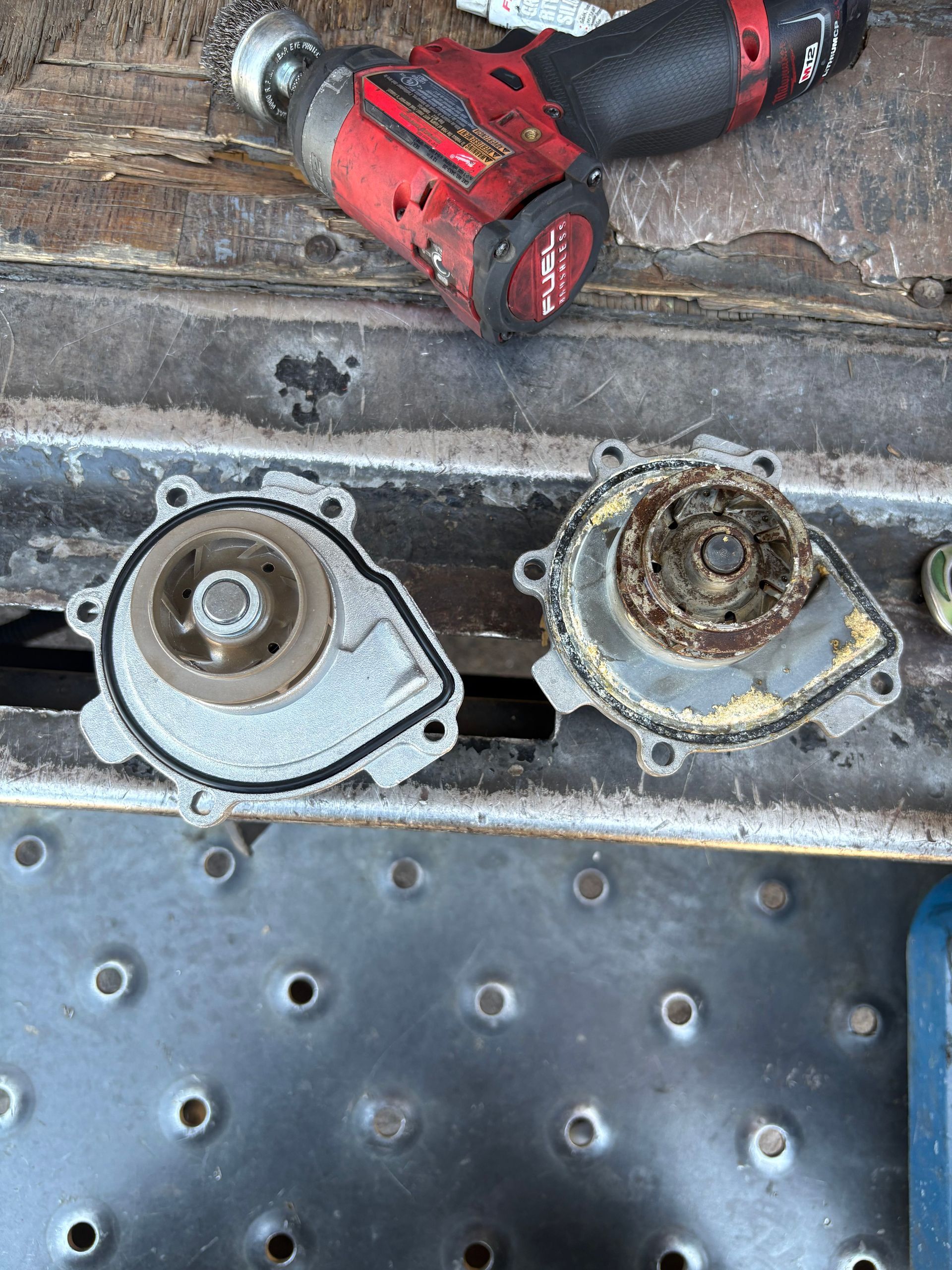
Why Noise Source Isolation Comes Before Any Repair
Vehicle noises are symptoms, not diagnoses. A grinding sound from a front wheel could originate from a worn brake pad, a failing wheel bearing, or a CV joint that has lost its grease—three different repairs with different costs and urgency levels. The only way to distinguish them is through systematic isolation: listening under different load conditions, checking component play by hand, and in some cases lifting the vehicle to inspect under load versus at rest.
Once the source is confirmed, you receive a specific explanation of what was found and what that component's failure looks like—not a general description, but the observed condition. A wheel bearing with measurable play, a brake pad worn to metal contact, an exhaust flange with a crack visible during inspection: those are the details that make a repair recommendation credible rather than speculative. First Time Fix IT does not recommend work based on a symptom description alone.
Some noises are intermittent, appearing under specific speed ranges, load conditions, or temperatures, and may not present during a stationary inspection. In those cases the technician documents the conditions under which the sound appears and explains what that pattern suggests about the likely system involved, so you have a clear picture even if a definitive confirmation requires a follow-up road test.
Answers About How the Work Is Done
The questions below cover how noise diagnosis is performed on-site and what the process looks like from inspection through explanation.
How does the technician systematically narrow down which system is producing a noise?
The road test or stationary test is conducted while varying speed, load, steering input, and braking to identify which conditions trigger or change the sound, then that pattern is matched to the mechanical systems that respond to those same variables.
What happens when a noise only occurs at highway speed and cannot be reproduced during an on-site inspection?
The technician documents the speed range, conditions, and character of the sound, then performs component-level checks on the systems most consistent with that pattern—typically wheel bearings, drivetrain components, or tire-related sources—to identify candidates even without a road test reproduction.
Why does isolating the noise by system matter before inspecting individual components?
Starting with the full vehicle and eliminating systems one at a time prevents confirmation bias, where a technician checks the first plausible component and stops rather than confirming whether another system could produce the same symptom under the same conditions.
How does vehicle age or mileage affect which systems are most likely to produce noise?
In higher-mileage commuter vehicles common in North Kansas City and Pleasant Valley, suspension bushings, wheel bearings, and brake hardware are statistically the most frequent noise sources because they accumulate wear proportional to road miles rather than age alone.
What should you note about a noise before the technician arrives so the diagnosis is more efficient?
Record when the noise starts (cold versus warm engine), at what speed it appears, whether it changes with steering input or braking, and whether it is consistent or intermittent—that information reduces the number of systems that need to be tested first.
First Time Fix IT also performs
noise diagnosis in Gladstone, North Kansas City, Pleasant Valley, and surrounding communities. To schedule an on-site evaluation, call First Time Fix IT at (816) 500-0070 with a description of when and how the noise presents so the technician arrives prepared for the most likely systems to test.