
Brake Wear Measured Before Any Parts Are Recommended
Brake service in Kansas City for vehicles with worn pads, scored rotors, or degraded brake fluid
Stop-and-go driving in northern Kansas City traffic wears brake pads at a different rate than steady highway use, and commuters who run the same routes repeatedly often reach service intervals faster than the mileage on the odometer suggests. First Time Fix IT performs brake service at your home or work location in Kansas City and Avondale, with the owner measuring pad thickness and rotor condition on site before recommending what needs to be replaced. Pads, rotors, and fluid are all within the scope of what gets inspected and serviced, on both foreign and domestic vehicles.
The technician removes the wheels, measures pad thickness with a gauge rather than estimating by eye, and assesses rotor surface condition and thickness against minimum specifications. You receive a specific account of what was found before any parts are touched. Replacement proceeds only on what the measurements confirm is worn past safe limits, which means you are not paying for rotors that still have serviceable life left.
Set up a mobile brake inspection at your parking location to find out exactly what your brakes currently measure before deciding on any service.
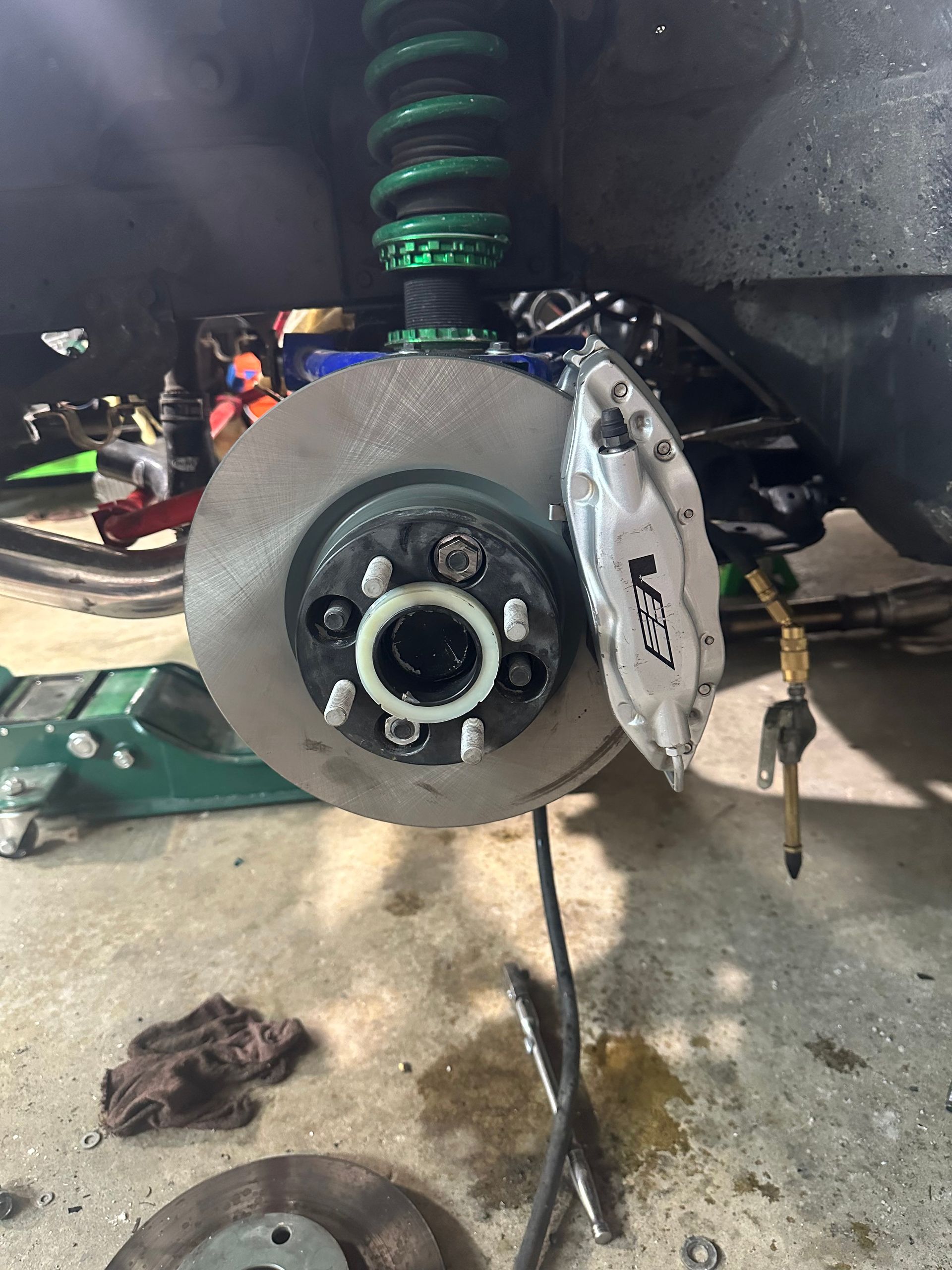
What Brake Service Actually Accomplishes When Done Correctly
Brake service that skips the measurement step creates two problems: parts that did not need replacing get replaced, and parts that did need replacing sometimes get missed because the job was scoped by symptom rather than by measurement. The technician at First Time Fix IT works from the gauge reading and rotor spec, not from a symptom checklist, which is why the service begins with wheels off before any recommendation is made.
After replacement, the vehicle stops with consistent pedal pressure rather than the increased travel or soft feel that worn pads and glazed rotors produce. Brake squeal from worn indicators disappears. Vehicles that were developing a pull to one side during braking often correct once a caliper that was not releasing fully is serviced alongside the pad replacement. The brakes are tested before the vehicle is returned to confirm the pedal feel is firm and the stopping response is even across all four corners.
Brake fluid condition is part of the inspection. Fluid absorbs moisture over time, which raises its boiling point threshold and reduces braking performance under heavy use. If the fluid is dark or shows elevated moisture content, replacing it is included in the service options you are offered, not added automatically without disclosure.
Questions About Mobile Brake Inspection and Repair
Before scheduling brake service on site in Kansas City, most vehicle owners have specific questions about what the inspection covers, how measurements are used, and what differentiates a brake service that is done thoroughly from one that replaces parts by assumption.
What measurement determines whether a rotor needs replacement versus resurfacing?
Rotor thickness is measured with a micrometer against the manufacturer's discard specification, which is stamped on the rotor itself. A rotor that is above discard spec but showing surface scoring can sometimes be resurfaced; one that is at or below discard spec is replaced regardless of surface appearance.
How does brake fluid condition affect stopping performance in a way that is visible to the driver?
Fluid that has absorbed significant moisture has a lower boiling point, which means hard braking from high speed can cause the fluid to vaporize partially, producing a spongy pedal that recovers only after the fluid cools. This is most noticeable on vehicles used in stop-and-go traffic patterns common in northern Kansas City commuter routes.
Why do brake pads on front axles wear faster than rear pads on most vehicles?
Front brakes handle the majority of stopping force because braking shifts vehicle weight forward, pressing the front tires harder into the road surface. On most front-wheel-drive vehicles common in Kansas City, front pads can wear at twice the rate of rear pads, which is why front and rear should be measured separately rather than replaced in matched sets by default.
What does the brake test after installation check for beyond basic stopping function?
The technician checks that pedal travel is consistent and firm throughout repeated stops, that the vehicle does not pull to either side during braking, and that no noise is present from the new pad contact with the rotor surface. A pull during braking after new pads are installed often points to a caliper that is not releasing evenly.
How is a caliper problem identified during a brake inspection?
A seized or sticky caliper usually shows up as uneven pad wear between the inboard and outboard pads on the same corner, or as a rotor that is significantly more worn on one side than on the same position on the opposite axle. The technician checks caliper slide function as part of the inspection rather than only measuring pad and rotor condition.
First Time Fix IT also performs
mobile brake service in the surrounding northern Kansas City metro communities. To arrange a wheel-off inspection at your home or work address, call (816) 500-0070.